Perspectives // Human-centred systems
Perspective 02
The Missing Infrastructure
Why the next challenge isn't building smarter systems. It's strengthening the human connections within them.
By DAVID STUART BATHE
2026
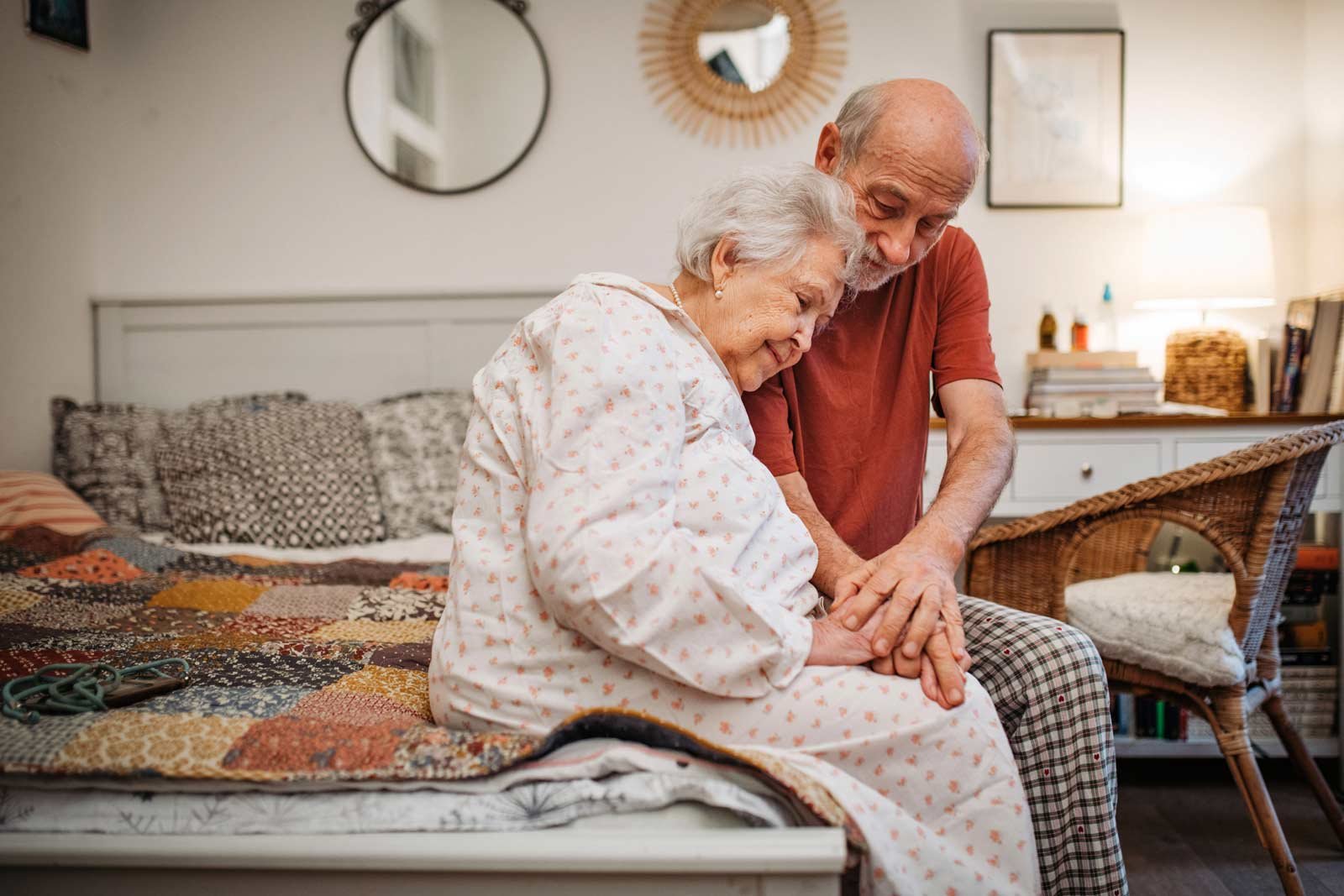
Across much of the developed world, society is undergoing a quiet transition. People are living longer. More care is taking place at home. Families are becoming smaller, busier and more geographically dispersed.
None of these changes are new.
What is new is what happens when they begin reinforcing one another.
Together, they are quietly redistributing responsibility across society.
Not because people suddenly care less.
Not because technology has failed.
But because the way we live has changed.
Responsibility is moving
For generations, much of the responsibility for supporting older adults sat within formal services, local communities or extended families living close together. Today, that picture looks very different.
More people are growing older while remaining independent for longer. Healthcare increasingly focuses on helping people stay in their own homes rather than moving into institutions. At the same time, families are often spread across different towns or cities, balancing careers, children and responsibilities of their own.
Responsibility has not disappeared.
It has simply moved.
Human infrastructure
The challenge is not that this redistribution is happening. In many ways, it reflects remarkable progress. People are living longer, healthier and more independent lives than ever before.
The challenge is that the human infrastructure needed to support this new reality has not kept pace.
By human infrastructure, I mean the everyday relationships, communication, coordination and continuity that allow ordinary people to support one another.
Because while responsibility has shifted, the practical support surrounding it often has not.
The gap between care and coordination.
This quiet redistribution of responsibility may become one of the defining social changes of the coming decades.
Families are increasingly expected to coordinate appointments, medications, services, paperwork, visits and countless everyday decisions that were once handled very differently.
Most families step forward willingly.
The challenge is rarely a lack of care.
More often, it is a lack of time, continuity and simple ways to remain connected, informed and organised together.
This is where the gap begins to appear.
Society has invested heavily in healthcare systems, digital services and welfare technology. These investments are both necessary and important.
Far less attention has been given to the everyday coordination taking place between family members, friends, neighbours, volunteers and care professionals.
The phone calls
The messages
The reminders
The conversations
The countless small moments of coordination that quietly enable someone to continue living safely, confidently and independently at home.
What is often missing is not another institution or another layer of administration.
It is the practical and emotional infrastructure that helps people work together.
The shared understanding that allows everyone involved to know what has changed, what still needs doing, who is visiting and who may need support themselves.
Because ageing at home is rarely sustained by one person.
It depends upon networks of people supporting one another over months and often years.
Technology's role.
None of this suggests technology is the problem.
Technology will almost certainly become an increasingly important part of how people age at home.
The more important question is whether it strengthens the human relationships surrounding care, or simply adds another layer for people to manage.
A different question
Perhaps the future lies less in asking how technology can replace people, and more in asking how it can help people support one another more effectively.
strengthen communication
reduce uncertainty
share responsibility
protect continuity.
And make everyday support feel more manageable rather than overwhelming.
Technology should not sit at the centre of ageing at home. People should.
Technology should strengthen the human connections between them.
The next challenge
The future of ageing at home will depend on more than better healthcare, public policy or increasingly sophisticated technology.
It will depend on whether society recognises the quiet redistribution of responsibility already taking place.
Because whenever responsibility moves, the infrastructure supporting it must move with it.
The next challenge isn't simply building smarter systems.
It's strengthening the human infrastructure that allows people to support one another within them.
About the author
David Bathe is the founder of WEAREONEWORLD. After more than four decades working across communication and designed solutions, his focus has shifted towards the societal changes reshaping everyday life. His work explores the changing relationship between people, systems and technology, and how creative thinking can help us recognise and understand emerging challenges before we rush to solve them.