Designing a Care Team Workspace
Five recurring challenges in informal caregiving
-
THE CHALLENGE
Care responsibilities, information, services and decisions are spread across different people and organisations. Families are frequently left to connect the pieces.
WHAT THE RESEARCH TELLS US
Research identifies informal caregivers as navigators, advocates and coordinators across fragmented services. Poor communication, repeated explanations, unclear responsibilities and difficulties accessing support create additional work.
KEY INSIGHT
Families are not simply providing care.
They are coordinating the conditions that make care possible.
THE DESIGN QUESTION
How might we make responsibilities, information and next steps easier to coordinate across a care circle?
ACADEMIC REFERENCES
Kim et al. (2023) — Informal caregivers and system navigation
Gautun & Bratt (2023) — Help and Care to Older Parents.
-
THE CHALLENGE
Caregiving increasingly involves remembering, interpreting, organising and following up on practical and digital responsibilities, often across multiple systems.
WHAT THE RESEARCH TELLS US
Norwegian research shows that digital and practical assistance are common forms of help provided by adult children. Swedish research highlights how digital strategies often prioritise older people's independence while paying less attention to the needs of those supporting them.
KEY INSIGHT
Digital competence and cognitive ease are not the same.
The human should not have to carry the architecture of multiple systems in their head.
THE DESIGN QUESTION
How might we reduce the mental and administrative work required to navigate everyday care?
ACADEMIC REFERENCES
Gautun & Bratt (2023) — Digital assistance to older parents
Nilsson et al. (2024) — Digital technology and informal carers
-
THE CHALLENGE
Caregiving responsibilities are not evenly distributed. One partner, daughter or other family member may become the default organiser, even when a wider personal network exists.
WHAT THE RESEARCH TELLS US
Swedish population research identifies differences in care provision according to gender and socioeconomic circumstances. Other research shows that the intensity of care varies considerably, and that high demands can fall on older caregivers themselves.
KEY INSIGHT
Having people around someone does not necessarily mean there is a functioning care team.
Nor does family connection imply an obligation to provide care.
THE DESIGN QUESTION
How might we make it easier for willing people to share responsibilities without creating new expectations or pressures?
ACADEMIC REFERENCES
von Saenger et al. (2023) — Care from adult children
Kirvalidze et al. (2025/26) — Caregiving intensity
-
THE CHALLENGE
The demands of caring can gradually compromise caregivers' own health, time, employment, independence and relationships.
WHAT THE RESEARCH TELLS US
Swedish research associates higher caregiving intensity with more negative experiences, poorer reported health and unmet support needs. Reviews of caregiver interventions also show that improving wellbeing is complex; providing additional tools does not automatically reduce burden.
KEY INSIGHT
Devotion is not unlimited capacity
Digitised care must not become an excuse to expect people to provide ever more of it
THE DESIGN QUESTION
How might we reduce unnecessary demands on caregivers while helping them recognise when additional support is needed?
ACADEMIC REFERENCES
Kirvalidze et al. (2025/26) — Older caregivers
Kirvalidze et al. (2023) — Caregiver intervention review
-
THE CHALLENGE
Changing care needs, fragmented communication and digital barriers can leave people uninformed, excluded from decisions or increasingly dependent on one individual.
WHAT THE RESEARCH TELLS US
Care-navigation research identifies continuity and communication as recurring challenges. Research into digital caregiving also highlights accessibility and the need to consider both older people's autonomy and the circumstances of informal caregivers.
KEY INSIGHT
The purpose of care infrastructure should be to support human relationships
Not turn relationships into additional system capacity.
THE DESIGN QUESTION
How might we help people remain connected, informed and involved while preserving independence, privacy and meaningful relationships?
ACADEMIC REFERENCES
Kim et al. (2023) — Care navigation and continuity
Nilsson et al. (2024) — Technology, independence and caregivers
WHO — Healthy ageing and functional ability
A way forward.
From fragmented care to a shared Care Team Workspace.
Ageing at home increasingly depends on the:
Practical availability
Cognitive capacity and
Emotional resilience of the care givers
Informal care givers must manage:
People — different responsibilities, availability and levels of commitment
Information — spread across services, applications and organisations
Activities — appointments, everyday tasks and follow-up
Communication — keeping everyone informed, involved and aligned
Healthcare professionals have dedicated systems to organise their work.
Informal care teams often don't.
Our proposition:
A non-clinical Care Team Workspace designed around the needs of informal carers.
One shared place to:
Bring people and everyday care activities together
Organise responsibilities and commitments
Share information and coordinate activities
Access guidance, services and support
Helping informal care teams stay connected, informed, organised and supported.
The Innovation
We don't need to reinvent:
Messaging and communication
Calendars and reminders
Video calling
Digital services and everyday applications
These applications work well individually. But caring happens collectively.
The innovation isn't creating new technology.
It's how we use existing technologies - together.
One shared workspace brings:
the people
the activities
the information
the tools
the services
together in to one unit meaning.
less switching between applications
less searching for information
less repeating the same messages to different people.
One shared workspace. One overview. Everyone on the same page.
And that's not the end.
That's just the beginning.
The Intelligence
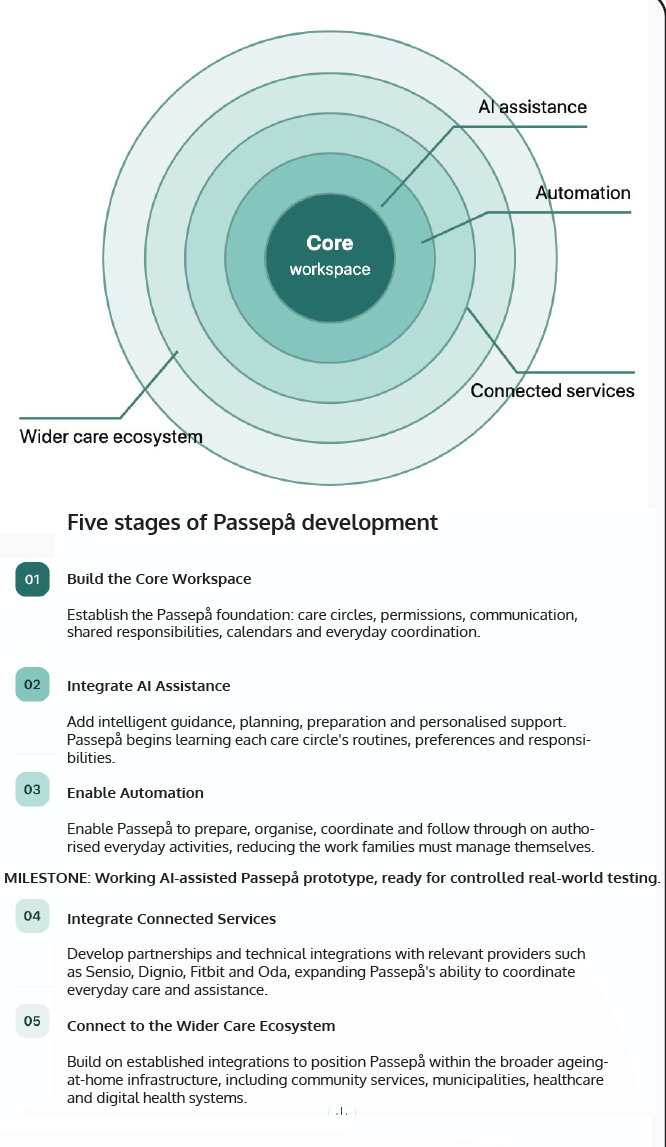
Bringing people together into one shared space creates an opportunity to do so much more:
The workspace can start working for the care group.
With AI assistance, it could help:
Remember: appointments, commitments, deadlines and unfinished tasks.
Organise: turn complicated processes into simple, manageable steps.
Anticipate: recognise what's coming up, what's missing and what might need attention.
Coordinate: suggest responsibilities, prepare updates and help keep everyone informed.
Navigate: find relevant information, services and possible solutions.
Support: help caregivers work through questions, uncertainty and difficult decisions.
Act : automate routine administrative tasks, with appropriate permissions and human oversight.
From managing - to helping you care.
The workspace could increasingly help people understand:
What needs doing
How to do it
Who can help
What comes next
And, where appropriate, carry out routine tasks on their behalf.
Not replacing human judgement or professional advice, but reducing the work people have to think about, remember and manage themselves.
The opportunity
Europe is undergoing a fundamental ageing-in-place transition.
People are living longer.
More people will need support at home.
Healthcare systems face increasing demands.
Informal caregivers are becoming essential to making this transition possible
A growing societal challenge creates an opportunity for a new kind of care infrastructure.
THE MISSION
To establish the Care Team Workspace as a recognised category of informal care infrastructure across the Nordic countries and Europe.
Making shared care coordination as familiar and accessible as other essential digital services.
THE VISION
To establish the Care Team Workspace as a trusted and inseparable part of the informal care infrastructure across the Nordic countries and Europe.
A recognised digital home for informal care, where people, intelligent assistance and the wider care ecosystem come together.
Not another service families have to manage, but the place from which they manage the others.
Development partners:
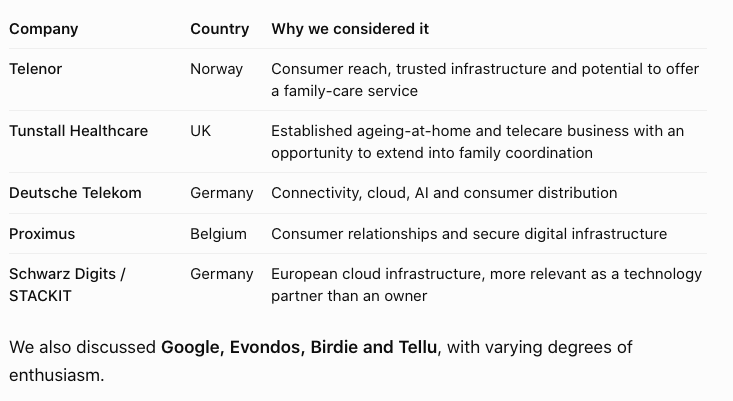
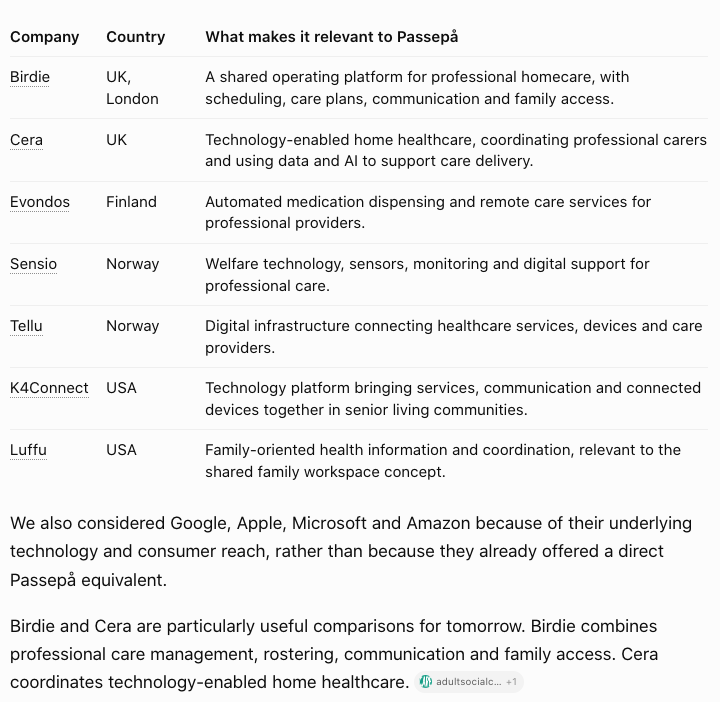
Care category partners:
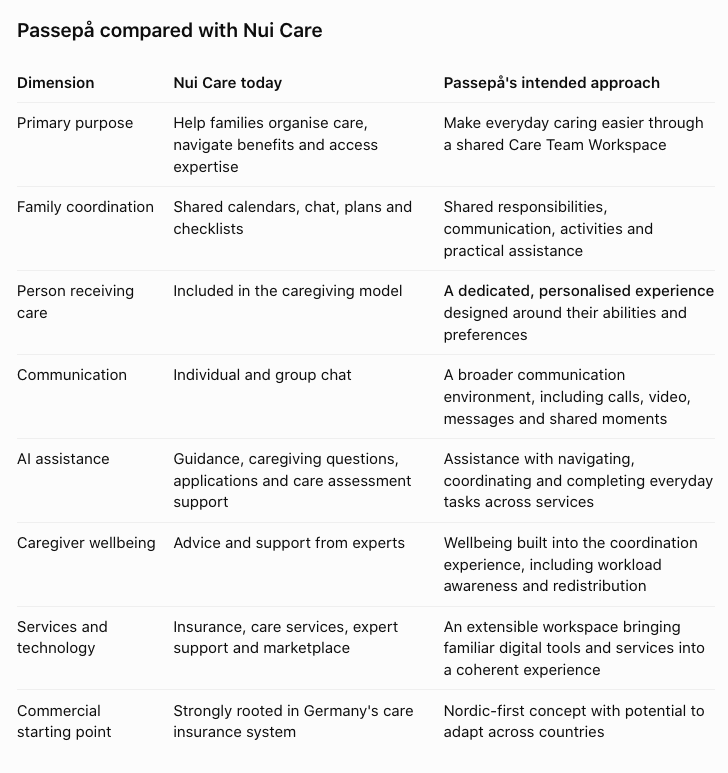
Closest competitor Nui Care
Genuine differentiation potential
Nui Care deeply rooted in Care Insurance system.
Nui's prominently emphasises:
benefits, applications, budgets and expert assistance.
Passepå is also concerned with maintaining relationships, sharing memories, keeping people involved and making ordinary communication effortless.
Nui Predominately treats older people as the subject of a care plan
Passepå aims to give them a simple, accessible place to participate, communicate and enjoy everyday life whilst seamlessly navigating the system securely
The ask
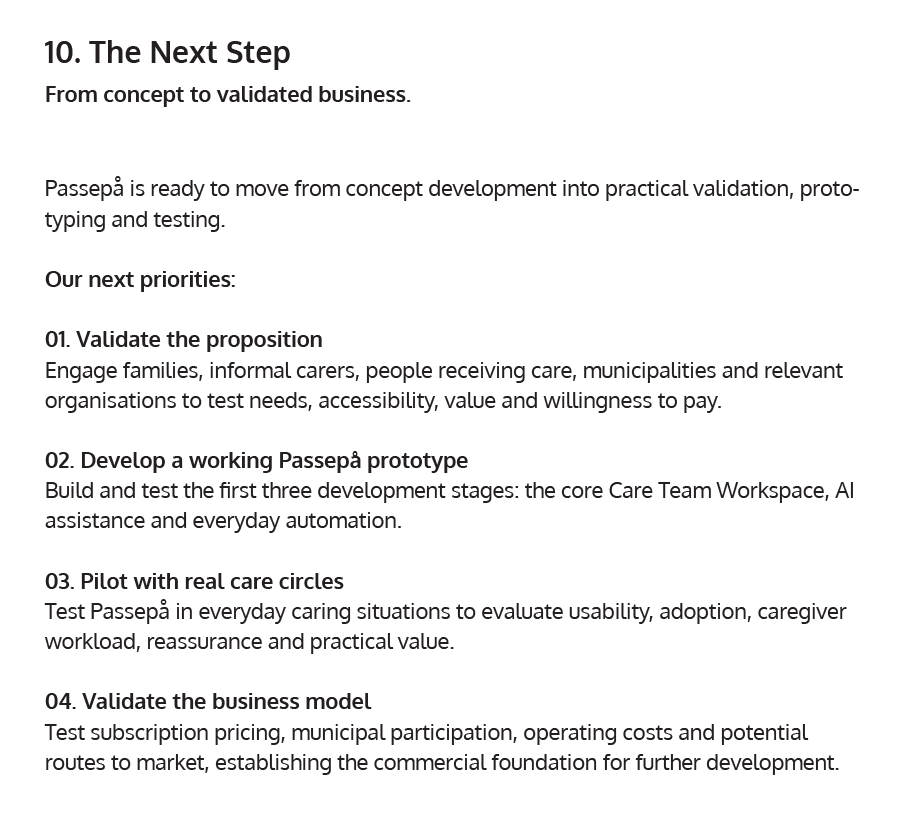
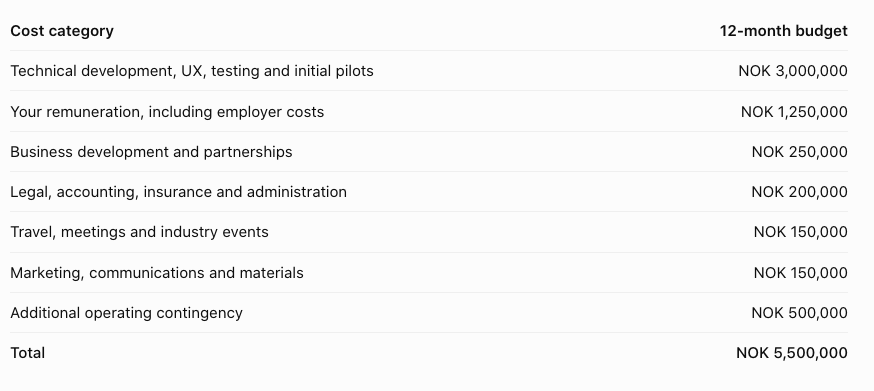
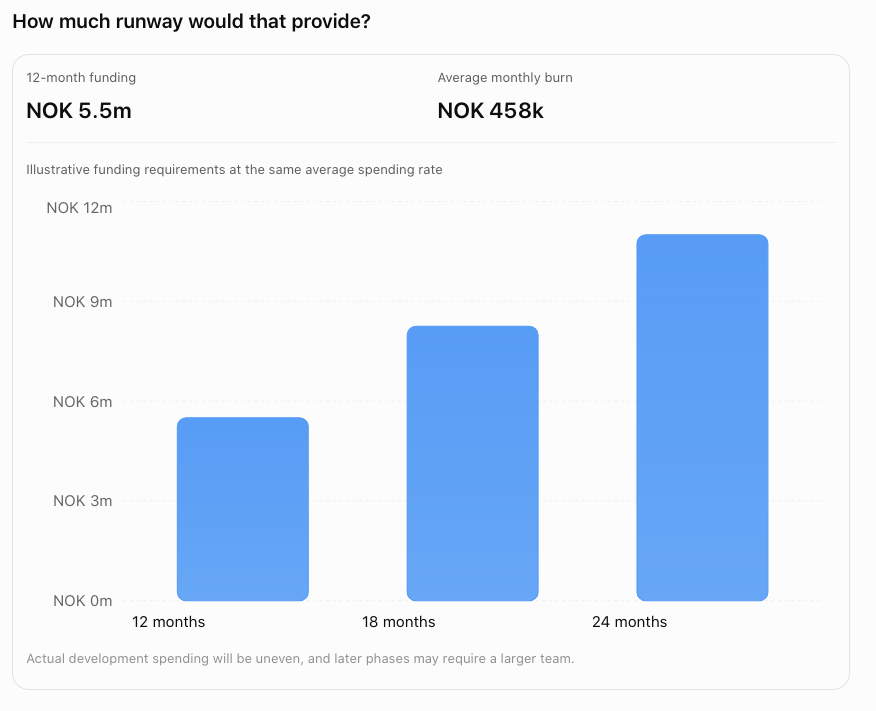
NOK 6m / 12 months
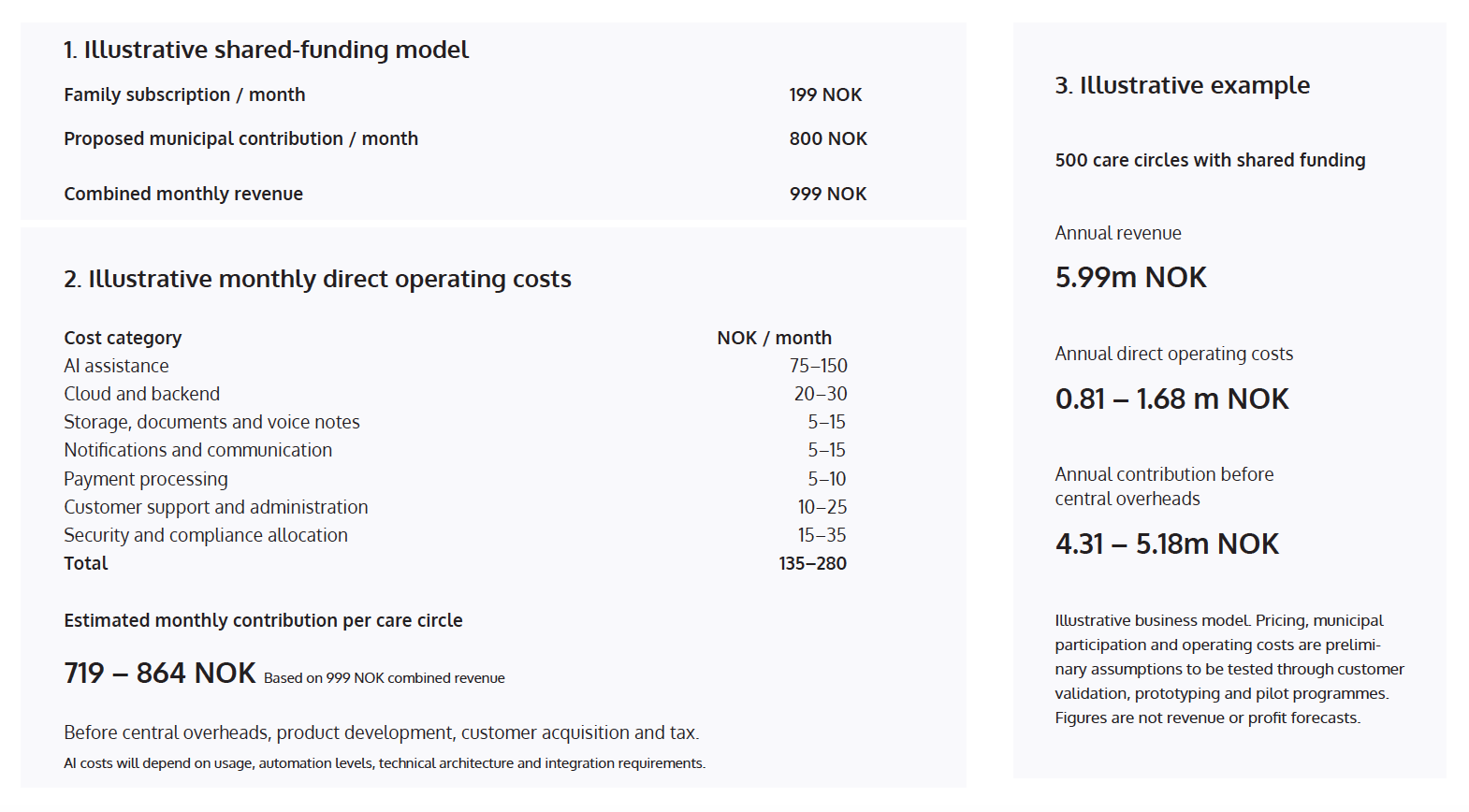
Business model